

What Makes a Good Pet Photo for Embroidery? (With Examples)
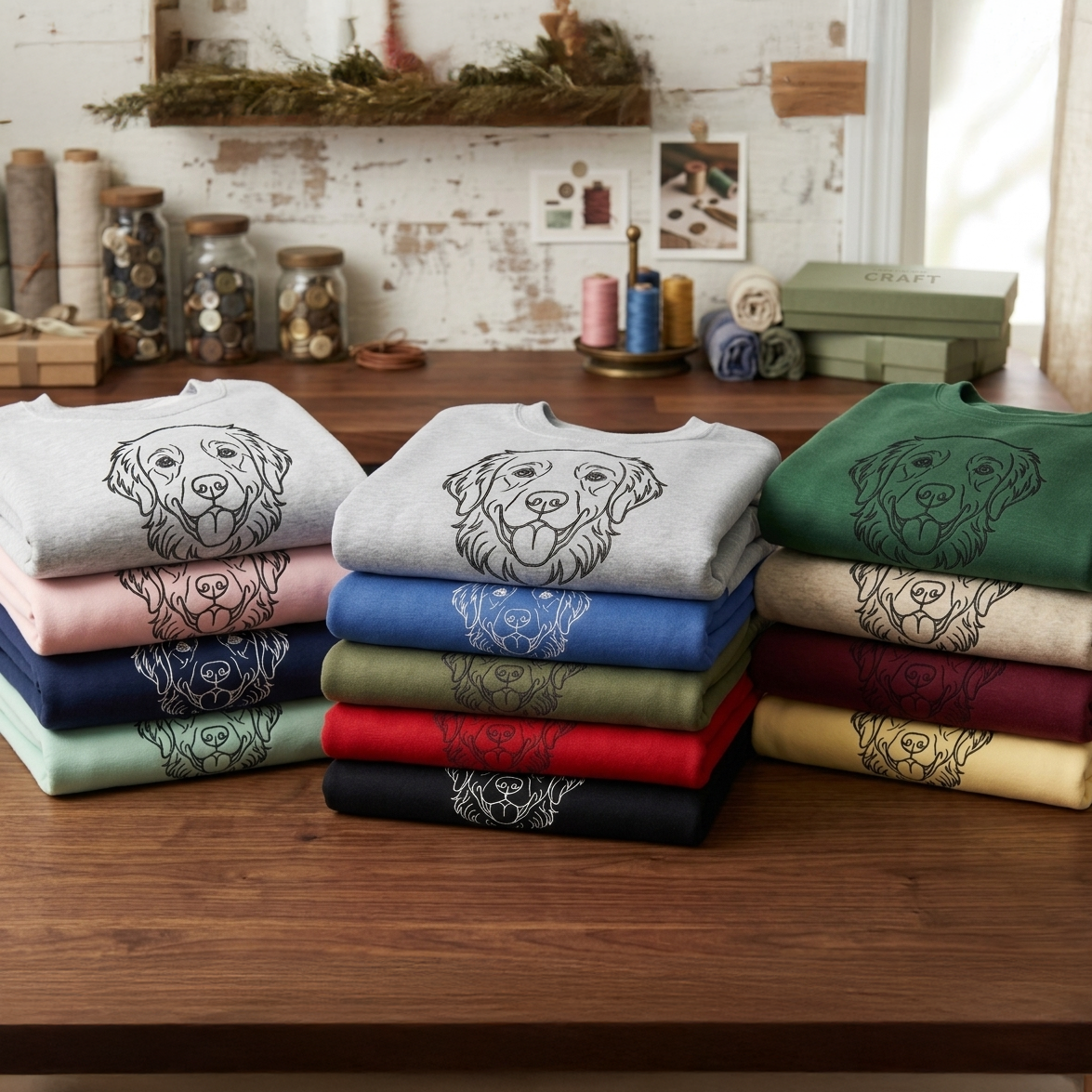
Everyone asks us the same thing before ordering: is my photo good enough? It's the right question, because the photo is the foundation of everything. A custom pet portrait is drawn by hand from your image, so the clearer we can see your dog or cat, the more character we can put back into the thread. The good news is that you almost never need a "professional" photo — a phone picture taken in the right conditions beats a studio shot taken in the wrong ones.
At Burecho, a family-run UK workshop, we've drawn portraits from thousands of photos, so we know exactly what helps and what trips people up. Here's the plain-English guide, with the kind of examples that make the difference obvious. It pairs naturally with our walkthrough of how custom pet embroidery works, if you want to see where your photo goes next.
The four things that matter most
1. Good, soft light
Light is everything. The ideal is bright but soft — daylight near a window, or outdoors on an overcast day. That kind of light wraps gently around your pet's face and shows the shape of the muzzle, the eyes and the ears without harsh shadows swallowing the detail.
What to avoid: direct camera flash (it flattens the face and gives glowing eyes), strong midday sun (it carves hard black shadows), and dim indoor lighting (the camera guesses and the detail turns to mush). If the room feels a bit gloomy to you, it's too gloomy for the photo — move nearer a window.
2. A straight-on, eye-level angle
Get down to your pet's level. A photo taken looking down at a dog makes the head look huge and the body tiny, which is hard to translate into a balanced portrait. Kneel or sit so the camera is roughly level with their eyes, straight on or very slightly to one side. That's the angle that reads as "them" when it's drawn.
Examples that work beautifully: your cat sitting and looking at you; your dog with their head up and ears in their natural position. Examples that fight us: a pet photographed from above mid-yawn, or a shot where the head is turned so far that one eye disappears.
3. Sharp focus on the face
The face is where the character lives, so it needs to be the sharpest part of the image. A little blur elsewhere is fine, but if the eyes and muzzle are soft, there's less for our artist to draw from. Tap the screen on your pet's face before you take the shot so the phone focuses there, and hold still — pets move, so take a burst and pick the crispest frame.
4. Fills a decent part of the frame
We'd rather have your pet filling half the frame than being a small figure across the garden. You don't need to crop in yourself — just get physically closer, or use a bit of zoom, so the face is large and clear. A tiny, distant pet zoomed in on later becomes pixelated, and pixels are exactly what we can't draw from.
Quick real-world examples
- Great: Phone photo, dog sitting by a window on a bright morning, camera at eye level, both eyes visible, face filling much of the frame. Perfect — nothing to fix.
- Great: Cat curled on a sofa, soft daylight, taken from the front. Even a relaxed, sleepy pose works if the features are clear.
- Fixable: Lovely photo but taken from above. A quick reshoot at eye level transforms it.
- Tricky: Flash photo at night with glowing eyes and deep shadows. We can work with a lot, but this one is worth retaking in daylight.
- Tricky: A very dark dog photographed against a very dark background, so the outline vanishes. A lighter backdrop or brighter light rescues it.
Special cases: black pets, fluffy pets and multiple pets
Black or very dark coats. These are the classic challenge because detail hides in shadow. The fix is simply more light — bright, soft daylight so you can see the sheen and shape of the fur, plus a slightly lighter background so the silhouette stands out. Don't worry that the coat is one colour; our artists work in the highlights and contours.
Fluffy or long-haired pets. Texture is your friend here. A clear photo lets us decide how to simplify all that fur into flowing lines that still read as fluff. The portrait won't stitch every strand — it interprets the overall shape — but a sharp source photo gives us the character to work with.
More than one pet. A single photo of them together is lovely if you can get it, but a separate clear photo of each pet is often easier to draw from, and we compose them together at the artwork stage. Add a note with your order so we know who's who.
What you don't need to worry about
Plenty of things people fret about don't matter at all. The background is irrelevant — we draw your pet, not the sofa behind them. Your pet doesn't need to be perfectly posed or looking angelic; a bit of personality is welcome. And you absolutely don't need a fancy camera. The overwhelming majority of the photos we work from are ordinary phone pictures. What matters is light, angle, focus and framing, in that order.
Still not sure? Send it anyway
Here's the reassuring part: you're not committing blind. Once you order, we redraw your pet and you approve a digital proof before a single stitch goes into the garment. If a photo won't give a strong result, we'll tell you kindly and suggest an easy retake rather than pressing on. Nothing is finalised until you're genuinely happy — the process is designed to protect the keepsake, not rush it.
When you've got your photo ready, start on the custom pet embroidered sweatshirt page, or browse blanks in our sweatshirts and headwear ranges. If you're weighing up the finished result against a printed alternative, our piece on 10 reasons a custom pet portrait beats a printed one is a good next read, and if you're buying it as a gift, so is our guide to a thoughtful pet memorial gift or a present for a dog mum.
Frequently asked questions
Can I use a phone photo for pet embroidery?
Absolutely. Most of the photos we work from are ordinary phone pictures. What matters is that the image is well lit, taken at eye level, sharply focused on the face and framed so your pet fills a good part of the shot. A modern phone in decent daylight is more than enough.
What if my pet is black or very dark?
Dark coats are very doable, they just need good light so the shape and detail are visible rather than lost in shadow. Photograph in bright, soft daylight and, if you can, against a slightly lighter background so the outline stands out. Our artists work in the highlights and contours.
Does the background of my photo matter?
No. We draw your pet, not the surroundings, so a messy or busy background is fine. Focus on getting the lighting, angle and focus right on your pet's face and leave the background to us.
Can I send more than one photo?
Yes, and it often helps. Extra angles give our artist more to work from, especially for fluffy pets or unusual markings. For multiple pets, a clear separate photo of each is often easier to draw from than one group shot.
What happens if my photo isn't good enough?
We will tell you honestly and suggest an easy retake before we start. Because you approve a digital proof before anything is stitched, a weak photo never quietly becomes a disappointing portrait.
Do I need a professional or studio photo?
Not at all. A relaxed, well-lit snapshot of your pet being themselves usually captures more character than a stiff studio shot. Good light and a straight-on angle matter far more than expensive equipment.