

Why Hand-Finished Embroidery Costs More (And Why It's Worth It)
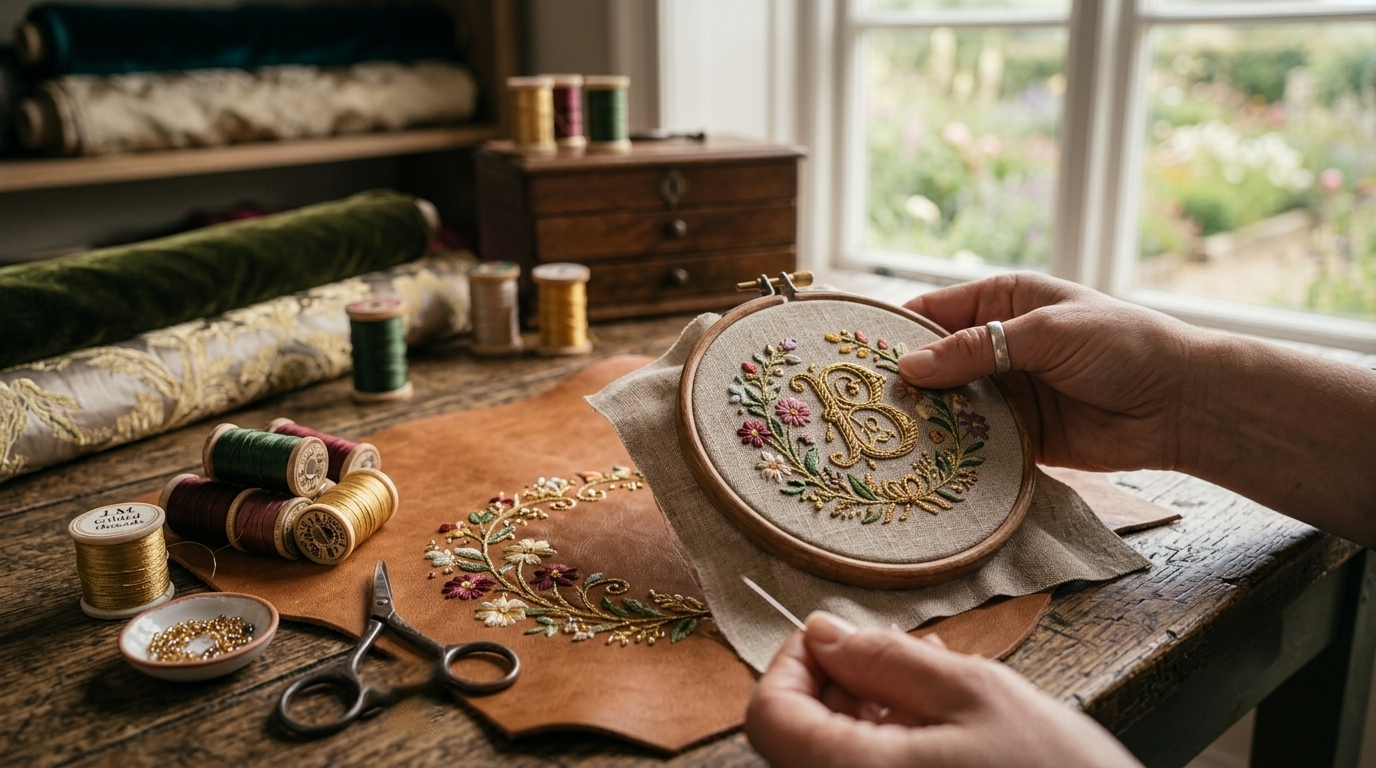
It's a fair question, and we'd rather answer it plainly than dodge it. Why does a hand-finished embroidered sweatshirt cost more than the printed one you can grab for a few pounds? The honest answer is that they're barely the same product. One is stamped out in seconds; the other is drawn, mapped and made to order by people. This is where that difference actually goes.
At Burecho, a family-run UK workshop, we make each piece one at a time. We're not going to pretend that comes at fast-fashion prices — but by the end of this you'll understand precisely what you're paying for, and why the maths works out in your favour over time.
What you're actually comparing
A cheap printed top is a blank garment with a design pressed onto it in a matter of seconds, usually at enormous scale in an overseas factory. There's no drawing, no craft, and no one looked at your specific request. It's designed to be cheap and, frankly, to be replaced.
Hand-finished embroidery is a different thing entirely. Before a needle touches fabric, a person has drawn your subject, translated it into stitches, and set up a single garment to be made for you. That's not a mark-up for the sake of it — it's genuine, skilled labour. Here's where it lives.
1. The artwork is drawn by hand
Every pet portrait or design starts with a person studying your photo and redrawing it as clean line art — deciding which lines to keep, which to simplify, and how to capture the character of a specific face. This is the step no algorithm does well. Two dogs of the same breed still come out looking like your dog because a human made those judgements. That drawing time is real, and it's the soul of the finished piece. Our walk-through of how custom pet embroidery works shows this stage in detail.
2. Digitising is a genuine craft
Once the artwork is approved, it has to be "digitised" — every single stitch mapped for direction, density, sequence, and where the needle starts and stops. This is the invisible skill that separates embroidery that lies flat, crisp and comfortable from embroidery that puckers, pulls and looks cheap. Good digitising takes years to learn and time to do well on each design. It's one of the biggest reasons hand-finished work costs more than a bulk print — and one of the biggest reasons it looks and lasts better.
3. Better materials cost more
We stitch onto heavyweight, substantial garments chosen to be a proper canvas and to survive years of wear — not the thin, papery blanks that keep printed tops cheap. Quality thread, quality fabric and organic cotton where we use it all cost more up front. That's a deliberate choice: there's no point putting hours of craft into a garment that falls apart after a season. This is the same logic behind our slow fashion approach — buy well, keep it long.
4. It's made to order, one at a time
Mass production is cheap because it's mass. We make your piece when you order it, which means setting up, hooping and aligning a single garment, changing thread colours by hand, and watching the tension as the portrait grows. There's no warehouse of pre-made stock and no economies of churning out ten thousand identical units. You're paying for something made for you, not pulled off a shelf.
5. A person checks it before it leaves
Every finished piece is inspected, gently pressed and packed by hand. If something isn't right, it doesn't go out. That quality control is only possible because a human is involved at the end — another cost that a fully automated, price-first operation simply skips.
"Hand-finished" — what it does and doesn't mean
We're careful with language, so let's be precise. The embroidery is done on a machine guided by a maker — that's how modern embroidery works, and anyone claiming to hand-stitch every commercial portrait with a needle and thread is stretching the truth. "Hand-finished" means the human craft is in the drawing, the digitising, the colour choices, the setup, the supervision and the finishing — not that a person pushed a needle through fabric ten thousand times. We think that honesty matters, and it's the same distinction we draw for leather goods in handmade vs hand-finished leather.
The real comparison: cost per wear
Here's where the maths turns. A cheap printed top might cost a fraction of a hand-finished one — but the print cracks, peels and fades, often within a year, and then it's landfill. A stitched portrait, cared for properly, keeps its detail for many years and only grows softer and more yours. Divide the price by the number of times you'll actually wear it, and the "expensive" option is frequently the cheaper one. It's the same buy-it-for-life logic we apply to leather in embroidery vs print vs vinyl, where we show exactly why stitched designs outlast the alternatives.
There's also a value that doesn't fit on a spreadsheet: a keepsake that captures a specific pet, drawn by a real person, made in a real workshop. You can't get that at any price from a machine that stamps thousands of identical prints an hour.
Where your money goes, in one line
- Not into a middleman, a warehouse of stock, or a race to the bottom on price.
- Into a person drawing your subject, a digitiser mapping every stitch, quality fabric and thread, made-to-order labour, and a human checking it before it's posted from the UK.
If you'd like to see the craft up close, our behind-the-scenes piece on the story behind your stitch follows one portrait from photo to finished garment.
Worth it? We think so — honestly
You could spend less. Plenty of people do, and end up replacing the thing twice a year. What you're really choosing with hand-finished embroidery is a keepsake that lasts, made by people who care whether it's right — not a disposable print. That's the whole reason we do it this way.
See the work for yourself: start a portrait on the custom pet embroidered sweatshirt page, browse the sweatshirts range, or explore the full shop.
Frequently asked questions
Why is embroidery more expensive than a printed design?
Because it involves real skilled labour a print skips: drawing your subject by hand, digitising every stitch, using heavier quality garments, and making the piece to order one at a time. A print is stamped on in seconds at mass scale, which is why it's cheaper and doesn't last.
What is digitising and why does it add cost?
Digitising is mapping the artwork into individual stitches such as direction, density and sequence, so the embroidery lies flat and crisp. It's a genuine skill that takes years to learn and time to do well on each design, and it's one of the main reasons hand-finished work costs more.
Does hand-finished mean it's stitched by hand with a needle?
No, and we're honest about that. Modern embroidery is machine-guided. Hand-finished means the human craft is in the drawing, digitising, colour choices, setup, supervision and finishing, not that someone hand-sewed every stitch.
Is a more expensive embroidered top actually better value?
Often yes, on cost per wear. A cheap print cracks and peels within a year and becomes landfill. A stitched portrait keeps its detail for years and grows softer over time, so the price divided by wears is frequently lower.
What am I paying for exactly?
A person drawing your subject, a digitiser mapping every stitch, quality fabric and thread, made-to-order labour, and a human quality-checking it before it's posted from our UK workshop. Not a warehouse, a middleman, or mass production.
Are your pieces made in the UK?
Yes. Burecho is a family-run UK workshop. Every piece is drawn, digitised, embroidered, checked and posted by us, made to order rather than mass-produced or drop-shipped from overseas.