

Why Cheap Leather Peels — And How to Spot It Before You Buy
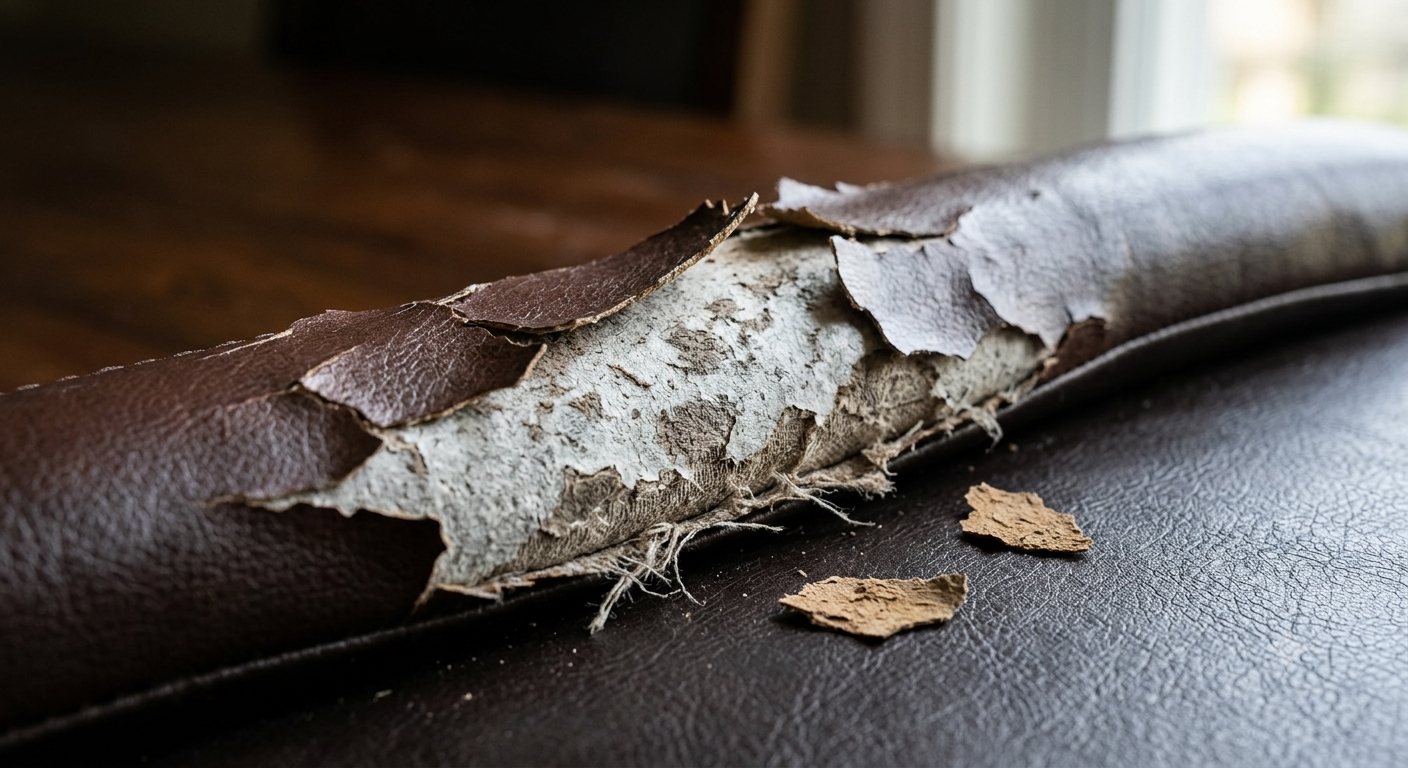
You've probably seen it, or owned it: a wallet, a belt or a sofa arm that starts to flake, crack and peel away in little papery flecks, revealing a strange fabric-like backing underneath. It feels like a defect. It isn't. It's exactly what that material was always going to do — the failure was built in the day it was made. At Burecho we think the best defence against wasting money on it is simply understanding what's really going on.
So here's the honest explanation of why cheap leather peels, what the reassuring labels actually mean, and the quick checks that stop you buying it in the first place.
The short version: it isn't really "leather" the way you think
When most people picture leather, they imagine a solid piece of hide, the same material all the way through. Genuine full-grain leather is exactly that. But a huge amount of what's sold as "leather" — especially at low prices — is something quite different: leather scraps and dust reconstituted with glue, or a thin, damaged hide layer coated in plastic-like finish to hide its flaws. Those constructions are engineered to look right on the shelf and fall apart in use.
Bonded leather
Bonded leather is the worst offender. It's made by taking leather off-cuts and fibres, grinding them into a pulp, mixing them with polyurethane or latex binder, and rolling the paste out into sheets. A grain pattern is embossed on top and a coloured coating is sprayed over it. Legally it can be called "leather" because it contains leather. Functionally it behaves like glued cardboard with a plastic skin — and that skin cracks and peels as soon as it's flexed enough times.
Corrected-grain and "genuine leather"
Then there's corrected-grain leather, often sold under the deceptively reassuring label "genuine leather". This is real hide, but from a lower layer, with its surface sanded down to remove blemishes and then stamped with a fake, uniform grain and sealed under a heavy pigmented coating. It's more durable than bonded leather, but that surface coating is still a separate layer sitting on top of the hide — and separate layers, given enough bending and time, delaminate. That's the peeling.
If the terms are a blur, our full breakdown of full-grain vs top-grain vs genuine leather untangles exactly what each label is (and isn't) promising you.
So why does it actually peel?
Peeling comes down to one principle: anything applied as a surface layer will eventually separate from what's underneath. On cheap leather, the "good-looking" part — the grain and colour — is a coating, not the leather itself. Every time the material flexes (a wallet opening, a shoe bending, an elbow on a sofa arm), the rigid coating and the softer backing move at slightly different rates. Do that a few thousand times and micro-cracks form. Add sunlight, body oils, heat and sweat, and the coating hardens, embrittles and finally flakes off in sheets.
Genuine full-grain leather can't peel in the same way for a simple reason: there's no separate skin to peel. The surface is the leather, all the way down. It scratches, softens and darkens — but it wears in rather than falling apart. That's the whole difference between a material that develops a beautiful patina and one that simply disintegrates.
How to spot cheap, peel-prone leather before you buy
You don't need to be an expert, and you rarely need to trust the seller's adjectives. Use your senses and a bit of scepticism:
- Read the exact wording. "Genuine leather", "bonded leather", "PU leather", "leatherette" and "man-made materials" are all red flags for a coated or reconstituted product. Makers of real full-grain say full-grain, proudly and specifically.
- Look at the edges and back. Real leather has a fibrous, suede-like reverse. Bonded leather often has a fabric backing you can see at the edges. A perfectly smooth plastic backing is a giveaway.
- Check the grain. A too-perfect, endlessly repeating grain pattern is embossed and fake. Real full-grain has natural irregularities — pores, subtle variation, the odd character mark.
- Smell it. Genuine vegetable-tanned leather has a rich, earthy, unmistakable smell. A chemical or plastic smell suggests a heavy synthetic coating.
- Feel it flex. Bend a corner gently. Good leather creases softly and springs back. Coated leather can show a pale, stiff crease line where the finish is straining — the future peel point.
- Be suspicious of the price. A "leather" sofa or jacket at a price that seems too good to be true almost always is. Real hide, properly tanned, costs real money.
For a broader red-flags checklist that goes beyond leather, our guide on how to spot genuine handmade products online is a useful companion.
Can you stop peeling once it starts?
Honestly? No — not really. Once a coating begins to delaminate, there's no reliable fix. You can slow it with conditioner and gentle handling, but you're managing decline, not reversing it. This is the crucial point: peeling is a materials problem, not a maintenance one. No amount of care rescues bonded leather, because the flaw is in the construction. Contrast that with real leather, where a scratch can be buffed out (see how to remove scratches from full-grain leather) and a tired piece can be revived with conditioning.
The false economy of cheap leather
Here's the part that stings. A peeling wallet or bag doesn't just look bad — it's money spent on something guaranteed to fail, then spent again on its replacement. That's the exact cycle we unpick in is real leather worth it and buy it for life. Cheap leather feels like a saving at the till and turns out to be the expensive option over five years, with a pile of waste as a bonus. It's a small, everyday example of the bigger true cost of a £5 item.
What we use instead
We build our personalised leather goods from full-grain, vegetable-tanned leather — the whole top layer of the hide, with its natural surface intact and no plastic coating to peel. That includes premium Badalassi Carlo veg-tan in our Badalassi Heritage collection. It's why our full-grain leather journals and notebook covers are designed to darken and soften with age rather than crack and flake. If you'd like to understand the tanning behind that, vegetable-tanned leather explained is the natural next read, and you can browse everything in our leather products.
The bottom line is simple. Cheap leather peels because it was made to look like leather rather than to be leather. Learn the labels, trust your hands and nose, and you'll never be caught out by that first heartbreaking flake again.
Frequently asked questions
Why does cheap leather peel and flake?
Because the attractive surface is a coating or a reconstituted layer sitting on top of a different backing, not the leather itself. Repeated flexing makes the coating and backing separate, forming micro-cracks that eventually flake away. Real full-grain leather has no separate skin to peel.
Is genuine leather good quality?
Not usually, despite the reassuring name. Genuine leather typically means corrected-grain hide with a sanded surface and a heavy pigmented coating. It is real leather but low in the quality order, and that coating can crack and peel over time. Full-grain is the top grade.
What is bonded leather?
Bonded leather is made from ground-up leather scraps and dust mixed with glue, rolled into sheets, embossed with a fake grain and coated with colour. It behaves more like coated card than solid hide and is the most likely of all leathers to peel and crumble.
Can you fix peeling leather?
Not reliably. Once a coating starts to delaminate there's no dependable repair; conditioner and gentle handling only slow it. Peeling is a construction problem, not a care problem, which is why it can't be maintained away like an ordinary scratch on real leather.
How can I tell if leather will peel before I buy it?
Read the exact wording and avoid bonded, PU, and often genuine leather, check for a fabric or plastic backing at the edges, look for a too-perfect embossed grain, smell for chemicals rather than earthy leather, and be wary of prices that seem too low for real hide.
Does full-grain leather peel?
No, not in the same way. Full-grain uses the whole top layer of the hide with the surface intact and no plastic coating, so there's nothing to delaminate. It scratches, softens and darkens with age, developing a patina rather than flaking apart.