

Why We Started a Leather Workshop in Dorset
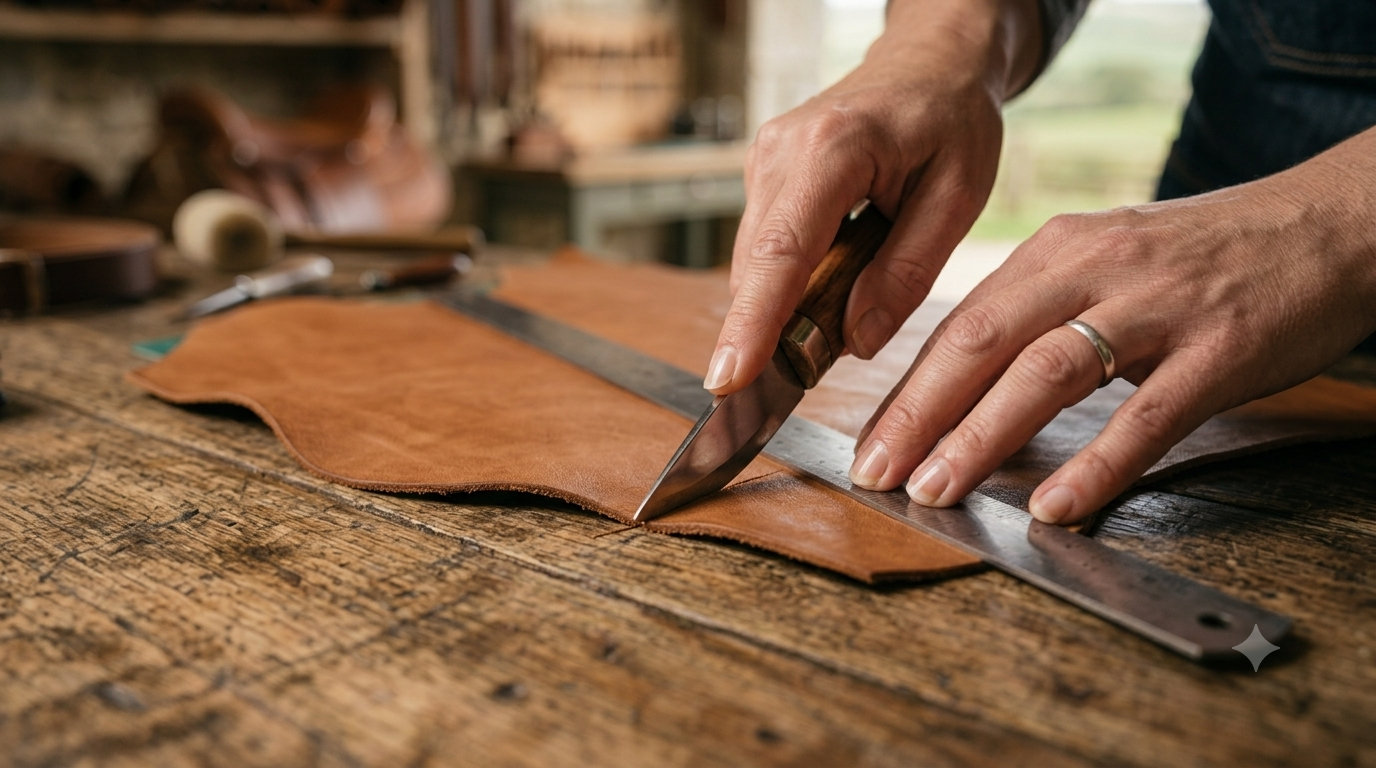
People sometimes assume there must be a strategic reason a small workshop lands where it does — a business park, a supplier hub, a clever bit of positioning. Ours is simpler and more honest than that. We started making leather goods and custom embroidery in Dorset because it's where we are, and because the place itself suited the kind of work we wanted to do: slow, careful, made by hand, unhurried by the logic of a warehouse. This is the story of how we ended up here and why it still matters to what leaves our door.
If you've read our introduction to the family behind the workshop, you'll know we're a small team who make everything ourselves. Where we make it turns out to be a bigger part of that story than we expected when we began.
Choosing to make things at all
Before the "where" came the "why". We started Burecho out of a fairly stubborn conviction: that there's still a place for real, made-to-keep things in a world drowning in disposable ones. We were tired of products designed to fail, of "handmade" claims that meant a machine did the work, of buying the same cheap item three times because none of them lasted. We wanted to make the opposite — fewer things, made properly, meant to be carried for years.
That conviction is the whole reason we build with full-grain, vegetable-tanned leather and stitch real embroidery rather than printing it. It's the thread through everything we've written on slow fashion versus fast fashion and buying it for life. But a belief needs somewhere to happen, and the character of that somewhere ends up shaping the work more than you'd think.
Why Dorset, specifically
Dorset is not a fast place, and that's precisely why it fits. It's a county of coastline and countryside on England's south coast, with a long, quiet tradition of making and mending — the sort of place where craft never entirely went out of fashion because it never chased fashion in the first place. Setting up here meant working somewhere whose whole temperament is patient. When your product is defined by care rather than speed, that matters.
A pace that suits handmade work
Handmade work can't be rushed without becoming worse. Cutting leather cleanly, saddle-stitching a seam, turning a pet photo into a stitched portrait — these are jobs that take the time they take. In a frantic environment you're forever tempted to cut corners. Dorset's slower rhythm makes it easier to do the unglamorous, careful thing: to redo the stitch, to wait for the leather to be right, to treat "good enough" as not good enough. That patience shows up in every finished piece, even if you can't name why.
Being near the coast
We're close to Poole and the sea, and there's something about coastal light and open space that suits detailed, absorbing work. It sounds romantic, and maybe it is a little, but the practical version is real: a calm workspace produces calmer, better work. If you'd like to see what an ordinary day actually looks like here, we've put together a photo essay from our Poole workshop.
A place with a making tradition
One of the quiet pleasures of being in Dorset is that we're not alone. The county has a genuine community of independent makers — potters, printers, bakers, other small craft businesses — all working at a similar human scale. Being surrounded by people who value doing things properly reinforces the standards you hold yourself to. It's much easier to resist the race to the bottom when your neighbours refused to enter it too.
We've written about some of the people we admire in the Dorset makers we love, and it's not just sentiment. A local making culture is a practical support: shared knowledge, mutual encouragement, and a constant, low-level reminder of why any of this is worth doing. When you buy from a small maker, you're often buying into a whole little ecosystem of them, which is part of what we mean when we talk about buying direct and shopping small.
How the place shapes the products
You might reasonably ask whether location really affects a wallet or a sweatshirt. We think it does, in ways that are subtle but genuine.
- Standards. A slower, craft-minded environment makes it easier to hold a high bar, because there's less pressure to trade quality for throughput. The work sets the pace, not a conveyor belt.
- Materials. Starting from a values-first place made us fussy about what we build with. We chose full-grain, vegetable-tanned leather — including the premium Italian veg-tan in our Badalassi Heritage collection — because it ages beautifully and rewards care. Our full reasoning is in where we source our leather and why.
- Honesty. A small, rooted business can't hide behind a brand. Our name is on every parcel, so we make things we'd happily put our name to — and explain the real process, lead times and all, as in what happens after you order.
"Handmade in the UK" as more than a label
There's a lot of loose use of phrases like "British made" and "handcrafted" online, often stretched to cover things assembled elsewhere and finished here. Being genuinely rooted in Dorset means we can use those words honestly: the leather is cut here, the embroidery stitched here, the engraving done here. That distinction matters enough that we wrote a whole guide on what "handmade in the UK" actually means, so shoppers can tell the real thing from the marketing.
When you buy a personalised leather journal or a custom pet embroidered sweatshirt from us, "made in Dorset" isn't a sticker. It's a description of exactly where a real person sat and made your thing.
Still here, still glad we did
We could have started Burecho anywhere, or nowhere at all — plenty of good ideas never leave the "maybe one day" stage. Starting it here, in Dorset, gave the whole thing a character we didn't fully plan but wouldn't change: patient, honest, made by hand, part of a place that still values those things. It's why our work looks and feels the way it does, and why we're not remotely tempted to scale it into something faster and larger and worse.
If you'd like to see what all of that produces, the best introduction is the work itself. Have a look at our handmade leather goods and the full range — every piece carrying, somewhere in it, a little of the place it was made.
Frequently asked questions
Why did Burecho start in Dorset?
Because it's where we are, and because the place suits the work. Dorset's slower, craft-minded, coastal character fits the patient, careful nature of handmade leather and embroidery far better than a fast, warehouse-style environment would.
Are your products actually made in Dorset?
Yes. The leather cutting and stitching, the custom embroidery and the free engraving all happen in our Dorset workshop. Made in Dorset is a description of where a real person made your piece, not a marketing sticker.
Does location really affect the products?
Subtly but genuinely. A slower, craft-focused setting makes it easier to hold high standards, be fussy about materials and take the time each piece needs. That patience shows up in the finished work even if you can't point to exactly where.
Is there a making community in Dorset?
Yes - the county has a real community of independent makers working at a human scale. Being surrounded by people who value doing things properly reinforces our own standards and is a practical source of shared knowledge and encouragement.
What does handmade in the UK mean for your business?
For us it's literal: the leather is cut here, the embroidery stitched here and the engraving done here, rather than assembled elsewhere and finished in the UK. Being genuinely rooted in Dorset is what lets us use the phrase honestly.
Are you near the coast?
Yes, we're close to Poole and the sea. Beyond being pleasant, the calm coastal setting genuinely suits detailed, absorbing craft work - a quieter workspace tends to produce more careful results.