

Our Materials: Where We Source Our Leather and Why
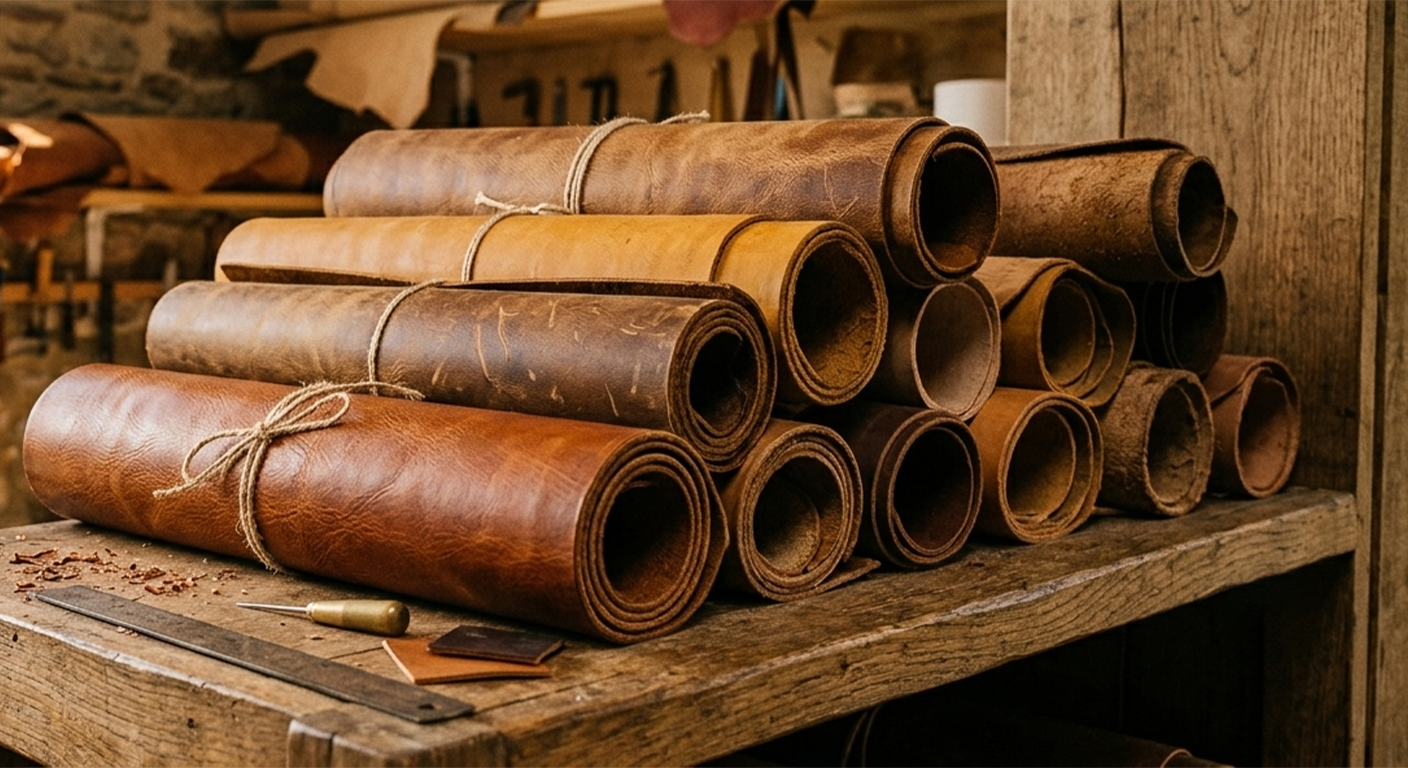
When someone picks up one of our journals or passport wallets, the first thing they usually do is run a thumb across the grain. The second thing they do is ask where the leather comes from. It is a fair question, and one we love answering, because the material is where every good handmade product either succeeds or quietly falls apart. A beautiful stitch on poor leather is lipstick on a problem. So this is the long version of the answer we give at markets: where we buy our hides, what we look for, and why we are willing to pay more for less.
We are a family-run workshop in Poole, Dorset, and we make personalised leather goods to order. That "to order" part matters, because it changes how we buy. We do not need warehouses of stock. We need consistent, honest leather we can trust to age well over decades, because our customers keep these things for a long time. When you are making something a person will carry every day for ten or twenty years, the sourcing decision is not a footnote. It is the whole game.
What we mean when we say full-grain
Almost all of our leather work uses full-grain leather, and it is worth being precise about that phrase because the industry loves to blur it. Full-grain means the top layer of the hide — the tightest, strongest, most character-rich part — is left intact, not sanded down to hide blemishes. It keeps the pores, the natural markings, and the fibre structure that make leather strong and let it develop a patina. If you want the whole taxonomy, we wrote a plain-English breakdown in full-grain vs top-grain vs genuine leather, but the short version is this: full-grain is the good stuff, and everything sold as "genuine leather" is usually the leftovers.
We choose full-grain because it is the only category that gets better with use. Top-grain has been buffed smooth and sealed, which looks tidy on day one and then stays exactly the same until it wears through. Full-grain drinks in oil from your hands, softens at the fold points, deepens in colour, and earns a surface no factory can fake. That process — the reason leather lovers exist at all — is something we explain in more depth in our piece on what patina is and why people chase it.
The tanneries we trust
Most of our premium hides come from Badalassi Carlo, a family tannery in Tuscany with a serious reputation for vegetable-tanned leather. Their Pueblo and Minerva ranges are what we reach for when we want leather with real depth and a hand that improves with age. We built an entire collection around it — you can see the pieces in the Badalassi Heritage collection — because the material genuinely deserves its own name on the label. It is not marketing. Badalassi is one of a shrinking number of tanneries still doing slow, traditional tanning at that quality.
Vegetable tanning is central to why we chose them. Instead of chromium salts, veg-tan uses natural tannins from tree bark and other plant matter, in a process that takes weeks rather than hours. It is slower, more expensive, and far more forgiving to the environment. It also produces the firm, structured, warm-toned leather that ages into something beautiful. We go deeper on the method in vegetable-tanned leather explained, and if you want to understand the darker, oilier hides we sometimes use, our note on Crazy Horse leather covers that too.
Why not just buy cheaper leather?
We could. The margins would be better on day one. But we have handled enough cheap leather to know exactly how it fails: it peels. Corrected-grain and heavily coated leathers wear a plastic finish that cracks and flakes once the surface is stressed, and there is no repairing it. We wrote a whole warning about this in why cheap leather peels, because it is the single most common regret people bring to us about a previous wallet. Buying good leather is not us being precious. It is us refusing to make something we would be embarrassed to see again in two years.
How we choose a hide, not just a supplier
Sourcing does not stop at the tannery gate. Every hide is different, and part of working with natural material is accepting that. When our leather arrives, we go over it by hand. We look for tight, even grain in the areas we will cut for wallets and covers. We note the natural marks — the odd scar, an old insect bite, a range brand — and we plan our cutting around them, or we leave them in deliberately where they add character rather than weakness.
- Firmness: journal covers and passport wallets need structure, so we select firmer cuts from the back of the hide.
- Softer bends: pen sleeves and wrap closures want a little more give, so those come from different areas.
- Colour consistency: because these are natural dyes, we group hides so a matching set actually matches.
- Thickness: we skive and select for the job, rather than forcing one thickness to do everything.
This is the part machines and mass production skip. A factory cuts to a template and averages out the waste. We cut around the story of each hide, which means more offcuts and more time, but a far better finished piece. It is the same philosophy behind our full-grain traveller's journal and our personalised passport wallet — pieces where the grain is allowed to be itself.
The parts of "leather" nobody photographs
Thread, edges, and finish matter as much as the hide. We saddle-stitch by hand with waxed thread, which is slower than a machine but far more durable, because each stitch is independently locked — if one breaks, the row does not unravel. We explain the mechanics in saddle stitching vs machine stitching. Edges are burnished, not painted with a plastic coating that chips. And we finish with natural conditioners rather than heavy sealants, so the leather can keep breathing and ageing the way it is supposed to.
All of this feeds into a bigger belief that runs through the workshop: buy fewer, better things. A well-sourced, well-made wallet is not an expense, it is a swap for the five cheap ones you would otherwise replace. We ran the actual numbers in why one good wallet beats five cheap ones, and the maths is not close.
Sustainability, honestly
We are not going to pretend leather is a zero-impact material, because that would be dishonest, and honesty is the whole point of this post. Leather is a by-product of the meat industry, veg-tanning is far gentler than chrome tanning, and a product that lasts decades is doing something meaningfully better than fast fashion's throwaway churn. But it is a real debate with real trade-offs, and we would rather you read our balanced take in is leather sustainable? than take a marketing slogan at face value. Our position is simple: choose natural tanning, make it last, and repair rather than replace.
What this means for you
When you buy a leather piece from us, you are buying a specific hide, chosen by hand, from a tannery we can name, cut and stitched by people who will happily tell you exactly what it is. There is no mystery filler, no bonded scraps glued into a sheet, no coating hiding the truth. If you want to browse what we make with it, the leather products category is the place to start, and the Badalassi Heritage collection is where the very best hides end up.
Materials are not glamorous. They do not photograph as well as a finished gift with a name engraved on it. But they are the promise underneath everything we make, and we would rather over-explain them than let you wonder.
Frequently asked questions
Where does Burecho's leather actually come from?
Most of our premium hides come from the Badalassi Carlo tannery in Tuscany, a family business known for traditional vegetable-tanned leather. We select full-grain hides and cut them by hand in our Poole, Dorset workshop.
What is the difference between full-grain and genuine leather?
Full-grain keeps the strongest top layer of the hide intact and ages beautifully. Genuine leather is a low-grade catch-all term, often made from sanded or layered leftovers. We only use full-grain.
Why is vegetable-tanned leather better?
Vegetable tanning uses natural plant tannins instead of chemical salts. It takes weeks rather than hours, is gentler on the environment, and produces firm, warm-toned leather that develops a rich patina over years of use.
Does more expensive leather really last longer?
Yes, when the extra cost buys full-grain rather than coated leather. Cheap corrected-grain leather peels and cracks once its plastic finish is stressed. Good full-grain softens and improves instead of failing.
Is leather a sustainable choice?
It is a genuine debate with trade-offs. Leather is a by-product of the meat industry, veg-tanning is far gentler than chrome tanning, and a product that lasts decades beats fast-fashion churn. We favour natural tanning, longevity, and repair over replacement.
Can I see which products use the best hides?
Yes. The pieces made from our finest Badalassi leather live in the Badalassi Heritage collection, and everything we make in leather is grouped in our leather products category.