

What to Do When Leather Gets Wet
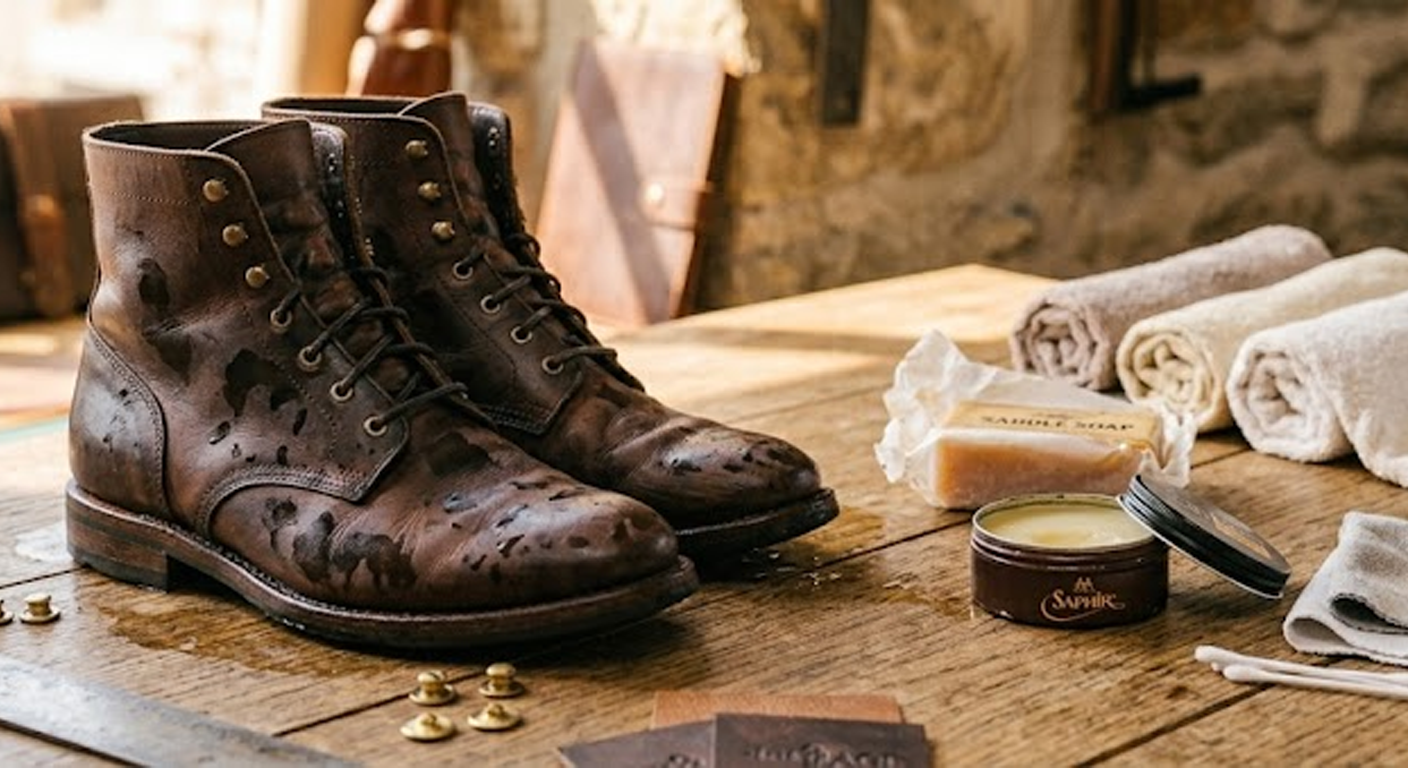
Sooner or later, every leather item meets water. A sudden downpour on the walk home, a wallet that goes through the wash by accident, a coffee tipped across a desk and onto your journal. The good news is that full-grain leather is far tougher than people fear — it comes from an animal that lived outdoors, after all. The bad news is that how you dry it matters enormously. Get it right and your leather shrugs the water off. Get it wrong and you can set a permanent stain or, worse, crack the hide for good.
At Burecho, our Dorset workshop makes personalised full-grain leather goods to order, and this is one of the most useful things we can teach you to protect them. Here's the calm, step-by-step version — what to do the moment leather gets wet, and just as importantly, what never to do.
First, don't panic — and don't reach for heat
The single biggest mistake people make with wet leather is trying to dry it quickly. A radiator, a hairdryer, direct sun, an airing cupboard — all of these force the moisture out too fast, and as the water leaves, it takes the leather's natural oils with it. The result is a hide that dries stiff, brittle and prone to cracking. Once leather has cracked from heat drying, there's no going back.
So the golden rule is this: let leather dry slowly, at room temperature, away from any heat source. Patience is the whole technique. Everything else is just helping that slow, natural drying happen evenly.
The step-by-step: drying wet leather safely
1. Blot, don't rub
As soon as you can, gently blot the surface with a clean, dry, absorbent cloth or paper towel. Press to lift the water away rather than rubbing it around — rubbing pushes moisture deeper into the grain and can burnish or mark the surface. Get up as much standing water as you can, then move on quickly to drying the piece properly.
2. Empty and open it out
If it's a wallet, remove cards, notes and coins. If it's a passport cover, take the passport out. If it's a journal, remove the paper inserts (a refillable design makes this easy — one of the quiet advantages we cover in how refillable leather journals work). Open the item out so air can reach every surface, and unfold any wrap closures or straps.
3. Restore the shape while it's damp
Leather can distort slightly as it dries, so gently reshape it now, while it's still pliable. For a wallet, you can loosely pack the pockets with plain white paper or kitchen roll to hold the form and help absorb moisture from the inside — change the paper once it's damp. Avoid printed newspaper, as the ink can transfer.
4. Air-dry slowly at room temperature
Lay the item flat on a dry towel somewhere with normal room airflow, out of direct sunlight and well away from radiators. Turn it occasionally so both sides dry at a similar rate. Depending on how wet it got, full drying can take anywhere from several hours to a day or two. Resist the urge to hurry it.
5. Condition once it's fully dry
This is the step most people forget, and it's the one that saves the leather. Because water strips oils as it evaporates, dried leather is often thirsty and can feel a touch stiff. Once — and only once — the piece is completely dry, work in a small amount of leather conditioner or balm to replace those lost oils and restore suppleness. Go sparingly and build up; too much at once can darken the leather. Our guide on how to condition a leather wallet without ruining it walks through the right amount and technique.
What about water stains?
Water marks — those tell-tale rings or blotches — happen when water dries unevenly, concentrating minerals and disturbing the surface oils in patches. Vegetable-tanned leather, which we use, is a little more prone to them precisely because it's so natural and porous (the same openness that gives it a beautiful patina). Here's the trick most people don't know:
To even out a water stain, lightly dampen the whole panel — not just the mark. Using a barely-damp cloth, gently wet the entire surface around the stain so it dries uniformly rather than in a ring. Then let it air-dry slowly and condition as above. Because you're blending the mark into the whole surface rather than trying to lift it out, this often makes water spots disappear entirely. On tan and honey shades the marks show most; on brown and black they tend to blend away, which is one reason we talk through shade choices in our leather colour guide.
The don'ts — worth repeating
- Don't use direct heat. No hairdryers, radiators, ovens or hot sun. Heat is what cracks leather.
- Don't rub aggressively. Blot to lift moisture; rubbing pushes it in and can mark the surface.
- Don't condition while it's still wet. Sealing oil over trapped moisture can cause mildew and uneven darkening. Wait until it's bone dry.
- Don't over-condition. A thin layer restores; a thick layer clogs the grain and darkens the hide.
- Don't machine-wash leather. If it's already been through the wash by accident, air-dry slowly and condition well — it may recover better than you'd expect.
Can you waterproof leather in advance?
You can't make full-grain leather fully waterproof without a heavy synthetic coating that would smother its character — and we'd never recommend that. But a light, occasional application of a leather-safe wax or balm builds a modest water-resistant barrier that helps rain bead and roll off rather than soaking straight in. Waxed pull-up leathers like Crazy Horse already carry some of this protection built in, which is part of their rugged appeal. For everyday pieces, the routine in our full-grain leather care guide keeps them naturally more resilient.
When water is a good thing
It's worth remembering that a little exposure to the elements is part of what gives good leather its soul. A well-made, full-grain piece is designed to live in the world, not be wrapped in cotton wool. Dry it kindly, feed it when it's thirsty, and the occasional rain shower simply becomes another chapter in the patina. That resilience is a big part of why we think real leather is worth it in the first place.
If your favourite piece has seen better days, browse replacements and gifts in our leather products range, or take a look at the ready-for-life pieces in the Badalassi Heritage collection. Everything is made to order in our UK workshop with free engraving.
Frequently asked questions
Is my leather ruined if it got soaked?
Usually not. Full-grain leather is resilient and often recovers fully if you dry it slowly at room temperature and condition it once it is completely dry. The main risk comes from drying it too fast with heat, which is what causes permanent stiffness and cracking.
Can I dry wet leather with a hairdryer or on a radiator?
No. Direct heat forces moisture and natural oils out too quickly, leaving the leather stiff, brittle and prone to cracking. Always air-dry at normal room temperature, away from radiators, hairdryers and direct sunlight.
How do I get rid of a water stain on leather?
Lightly dampen the entire panel around the stain with a barely-damp cloth so it dries evenly rather than in a ring, then air-dry slowly and condition. Blending the mark into the whole surface often makes water spots disappear completely.
Should I condition leather after it gets wet?
Yes, but only once it is completely dry. Water strips natural oils as it evaporates, so a thin layer of conditioner restores suppleness. Never condition while the leather is still damp, as this can trap moisture and cause mildew.
How long does wet leather take to dry?
Depending on how wet it got, anywhere from several hours to a day or two at room temperature. Turn the item occasionally so both sides dry evenly, and resist any temptation to speed it up with heat.
Can I waterproof my leather to prevent this?
You can improve water resistance with an occasional light application of a leather-safe wax or balm, which helps rain bead and roll off. Full-grain leather cannot be made fully waterproof without a heavy coating that would harm its natural character.